A new site has been set up at
http://www.buzzingacrossamerica.com/
On the new site, you can meet the new American Honey Queen and Princess Teresa Bryson and Allsion Adams. Follow their travels and learn more about honeybees and hive products!
Thanks to all who have spent time on this blog. Please continue to support the United States beekeeping industry by using pure honey! -Lisa and Amy

Monday, January 17, 2011


Saturday, December 25, 2010
Beeswax Art?

Make sure that you have a parent help you as the wax will be hot!!
 Put beeswax and colored crayons (broken into small pieces and unwrapped) in a muffin tin. Melt at 200 degrees Fahrenheit in the oven. After having a parent remove the tray from the oven, use a butter knife to carefully layer color on a piece of cardboard. Try making a sunrise/sunset or other scene! The beeswax will harden very quickly, so just add another layer if you make a mistake.
 "Bee in the Know": One of the first groups to keep bees, the Egyptians (along with the Greeks and Romans) also made artwork using beeswax. It was even used to decorate coffins for mummies!
Monday, December 20, 2010
Buzzin' in a Winter Wonderland!
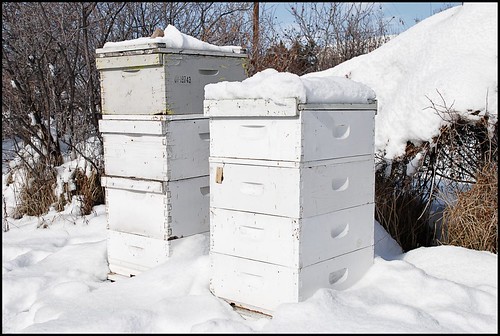
First of all, what the bees do depends on where you live. It's easier for the bees to overwinter in Florida where flowers bloom all year long than in Minnesota where it snows from November through March.
 |
| Clustering around the queen |
 |
| The drone bees being kicked out of the hive in the fall! |
I said the worker bees surround the queen. So, what happened to the drones? Because the drones don't help in the hive and eat more food, the drones are actually kicked out of the hive in the fall. In the winter, it's just the girls!
The queen bee may stop layings eggs for part or all of the winter. As it starts to get warmer, she'll begin to lay eggs. This is so new workers bees are ready to collect nectar and pollen at the beginning of spring!
"Bee in the Know": Some beekeepers move their beehives to southern states during the winter.
Friday, December 10, 2010
It's So Creamy!
We all love honey for the sticky, drippy sweetness. But did you know there's a way to eat honey with less mess? It's still pure honey, but it's in a spreadable consistency that won't dribble off of your biscuits.
This is called creamed, whipped, or spun honey (all the same thing). Creamed honey is thick and spreadble.

Try some creamed honey with peanut butter on toast for a fantastic "PB&H"
This is called creamed, whipped, or spun honey (all the same thing). Creamed honey is thick and spreadble.

How do we make creamed honey? It's not hard. First, we begin with a starter (creamed honey from another batch). Beekeepers then mix it with liquid (regular) honey for a certain period of time. After that it's refrigerated at 54 degrees Fahrenheit. Once finished, the creamed honey will stay nice and thick in your pantry.
"Bee in the Know": Honey will last forever if properly stored. If you have liquid honey that has crystallized, simply soak the jar in some hot (but not boiling) water and it will reliquify.
Monday, November 29, 2010
"Bee" a Beekeeper!
Did you know that you can be a beekeeper? People keep bees either for fun or as a full-time job. Let's look at beekeepers and other careers that are related to beekeeping.
Beekeepers
 People who "keep" honeybees take care of bees and make sure that everything is going right inside of the hive. When a beekeeper looks inside of a beehive, they look to make sure that the honeybees are healthy, the queen is laying eggs, and that the honeybees are making honey. There are beekeepers with just a few beehives in their backyard; others are commercial beekeepers- they might have hundreds or thousands of beehives. These individuals may take their hives around the United States to pollinate different crops like Almonds, Blueberries, and Cucumbers. Some of them specialize in selling honey to people like you and me!
If you are interested in starting beekeeping, you don't have to wait till you're an adult! I (Lisa) started beekeeping when I was twelve years old! Amy, the Honey Princess, started when she was eighteen. Read some books and get involved with your local or state beekeeping group. They'll probably have beekeepers that will help you get started.
Entomologist/Bee Research Scientist
Entomologists study insects. There are entomologists that study honeybees; they might look at honeybee bodies, investigate honeybee diseases, and teach the beekeepers new things. Entomologists go to college- they probably spent more than four years studying insects. Sometimes they spend time in a laboratory; at others, they might be working with beehives.
Meet Dr. Marla Spivak, a Bee Research Scientist in Minnesota. She won a prize about her bee research this year!
At Pennsylvania State University, scientists are trying to figure out the causes of "Colony Collapse Disorder". They even created a Center for Pollinator Research. Here's what they have to say!
Bee Removal Expert
Sometimes, honeybees get in place they aren't supposed to be- like the inside of houses, barns, or in a tree in your backyard. There are special beekeekepers that will take the honeybees out and take them back to their houses and put them in beehives. Remember, you don't have to be scared of honeybees; they can only sting one time and then they die. The best thing to do if you see honeybees is just to leave them alone. Then call one of these special beekepers.
There are many other jobs related to beekeeping! Start learning more today by getting involved with a 4-H program, reading great beekeeping books, or searching the Web. Find out more about things you can do now at the Help the Bees page.
Beekeepers
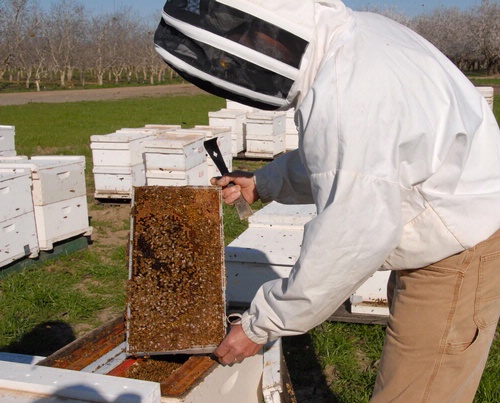
If you are interested in starting beekeeping, you don't have to wait till you're an adult! I (Lisa) started beekeeping when I was twelve years old! Amy, the Honey Princess, started when she was eighteen. Read some books and get involved with your local or state beekeeping group. They'll probably have beekeepers that will help you get started.
Entomologist/Bee Research Scientist
Entomologists study insects. There are entomologists that study honeybees; they might look at honeybee bodies, investigate honeybee diseases, and teach the beekeepers new things. Entomologists go to college- they probably spent more than four years studying insects. Sometimes they spend time in a laboratory; at others, they might be working with beehives.
Meet Dr. Marla Spivak, a Bee Research Scientist in Minnesota. She won a prize about her bee research this year!
At Pennsylvania State University, scientists are trying to figure out the causes of "Colony Collapse Disorder". They even created a Center for Pollinator Research. Here's what they have to say!
Bee Removal Expert
 |
| Uh-oh! While it is interesting to see how the honeybees build their homes, you would NOT want bees here! |
There are many other jobs related to beekeeping! Start learning more today by getting involved with a 4-H program, reading great beekeeping books, or searching the Web. Find out more about things you can do now at the Help the Bees page.
"Bee in the Know": There are about 200,000 beekeepers in the United States!
Monday, November 22, 2010
I'm Thankful For...
At Thanksgiving, many of us stop and think what we're thankful for- and there are so many things to consider. But most people don't know that we should be thankful for HONEYBEES!
Why would you want to be grateful for honeybees?
1. Tasty Thanksgiving Food
 From the cranberry sauce to pumpkin pie, much of our food during thanksgiving and throughout the year needs honeybee pollination. This means that maybe there wouldn't be as much to pass around the table without our friend the honeybee!
2. Clothes
Honeybees even help to pollinate cotton for the clothes that we wear!
3. Honey
I love honey on my rolls during dinner. Ask if you can get some honey for your honey-glazed turkey or ham, honey whipped cream to top off your pumpkin pie, and many other tasty foods during this holiday season.
4. Beeswax Candles
 A lot of people put special candles in the center of their tables for Thanksgiving. Light up the room (and the holiday atmosphere) with beeswax candles from a local beekeeper!
So many reasons to thank the honeybee!
Why would you want to be grateful for honeybees?
1. Tasty Thanksgiving Food

2. Clothes
Honeybees even help to pollinate cotton for the clothes that we wear!
3. Honey
I love honey on my rolls during dinner. Ask if you can get some honey for your honey-glazed turkey or ham, honey whipped cream to top off your pumpkin pie, and many other tasty foods during this holiday season.
4. Beeswax Candles

So many reasons to thank the honeybee!
"Bee in the Know": The pilgrims sweetened all of their dishes with either honey or maple syrup for the first Thanksgiving dinner!
Tuesday, November 9, 2010
Oh, Honey! What a Difference!
 |
| Lighter honey usually has a milder flavor (not quite as strong). The darker honey will typically have a more intense flavor- and it all depends on what the bees visit! |
3,000 different types worldwide? That means that you could try a new variety of honey every day for over eight years!
Some common and popular types of honey:
Clover- one of the most readily available sources of honey in the United States. Most clover honey comes from the Midwest (especially North and South Dakota, and Minnesota).
Buckwheat- a very dark honey that has a rich, robust flavor. Many people use the darkest varieties of honey for baking. Check out some honey recipes at the "Cooking with Honey" tab or on honey.com.
Fireweed- Fireweed honey from Alaska could possibly be mistaken for water! It's a much lighter color and has a very light taste, too.
See if your state has a unique type of honey! Look on honeylocator.com , ask a local beekeeper at a farmer's market or fair, or see your state's beekeeping fact!
"Bee in the Know": Honey draws in moisture from the air, so you can use it to keep muffins and bread fresh!
Subscribe to:
Posts (Atom)